The Middle Ages and Arab World
During the 600 years of the European Middle Ages from 600 to 1200, the tradition of herbal lore fell to the monasteries. Many of the monks were skilled at producing books and manuscripts and tending both medicinal gardens and the sick, but written works of this period simply emulated those of the classical era.
Meanwhile, in the Arab world, by 900 the great Greek herbals had been translated and copies lodged in centres of learning in the Byzantine empire of the eastern Mediterranean including Byzantium, Damascus, Cairo and Baghdad where they were combined with the botanical and pharmacological lore of the Orient. In the medieval Islamic world, Muslim botanists and Muslim physicians made a major contribution to the knowledge of herbal medicines. Those associated with this period include Mesue Maior (Masawaiyh, 777–857) who, in his Opera Medicinalia, synthesised the knowledge of Greeks, Persians, Arabs, Indians and Babylonians, this work was complemented by the medical encyclopaedia of Avicenna (Ibn Sina, 980–1037). Avicenna’s Canon of Medicine was used for centuries in both East and West. During this period Islamic science protected classical botanical knowledge that had been ignored in the West and Muslim pharmacy thrived.
Albertus Magnus – De Vegetabilibusedit
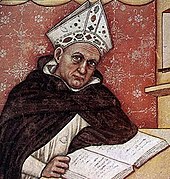
In the thirteenth century, scientific inquiry was returning and this was manifest through the production of encyclopaedias; those noted for their plant content included a seven volume treatise by Albertus Magnus (c. 1193–1280) a Suabian educated at the University of Padua and tutor to St Thomas Aquinas. It was called De Vegetabilibus (c. 1256 AD) and even though based on original observations and plant descriptions it bore a close resemblance to the earlier Greek, Roman and Arabic herbals. Other accounts of the period include De Proprietatibus Rerum (c. 1230–1240) of English Franciscan friar Bartholomaeus Anglicus and a group of herbals called Tractatus de Herbis written and pained between 1280 and 1300 by Matthaeus Platearius at the East-West cultural centre of Salerno Spain, the illustrations showing the fine detail of true botanical illustration.

Comments
Post a Comment